Birdsong as a safety signal
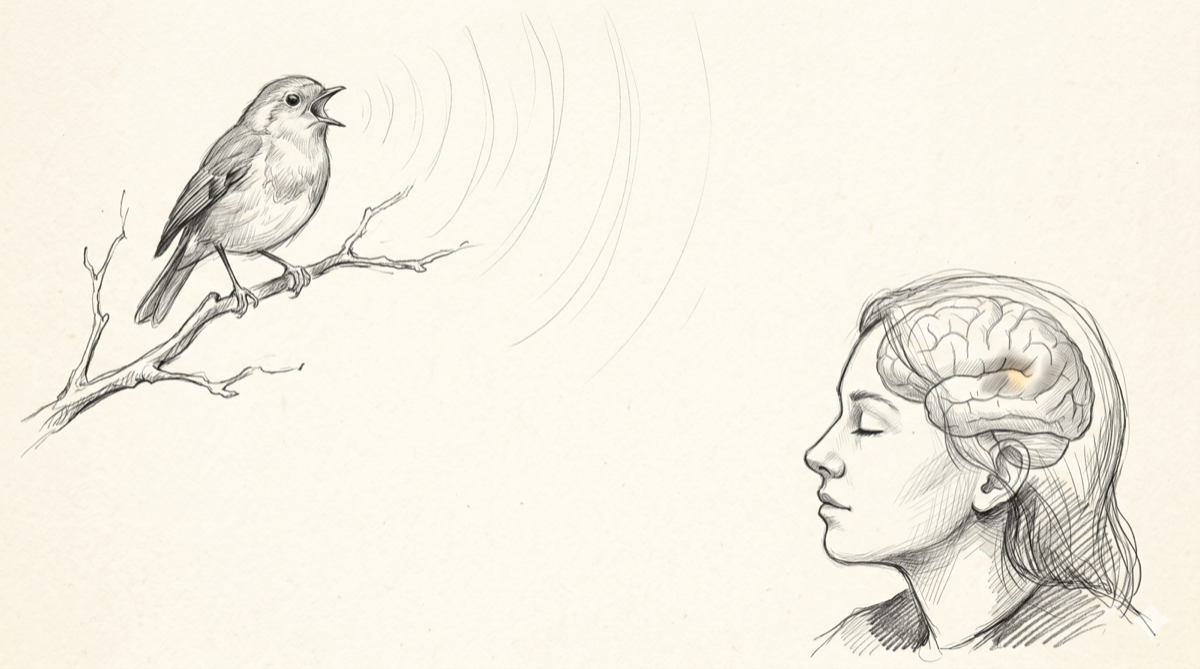
Your brain has an ancient circuit that is constantly, and subconsciously, monitoring whether birds are singing. It’s described as a predator-detection system that mammals have used for roughly 200 million years. A sudden stop in birdsong would historically signal the presence of a threat.
A few findings I came across:
- Birdsong reduces anxiety and depression. A 2022 study from the Max Planck Institute found that just six minutes of birdsong reduced anxiety, while the same amount of traffic noise increased symptoms of depression.
- It boosts “relaxed alertness.” EEG data shows birdsong at 45–50 decibels (about the volume of quiet conversation) increases alpha wave activity in the brain by 14.1%, which is associated with a state of relaxed alertness.
- The mood lift lasts for hours. A study from King’s College London with over 1,200 participants found that the positive mood lift from birdsong lasted for hours after the sound stopped.